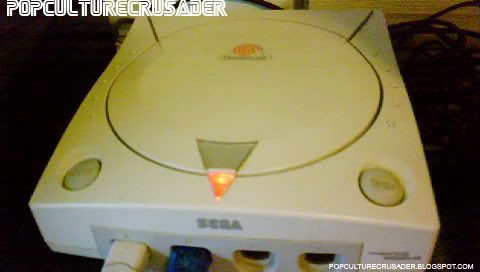
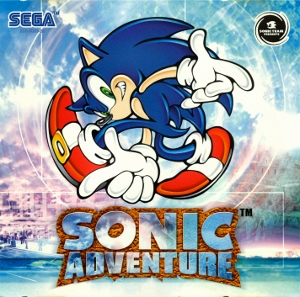
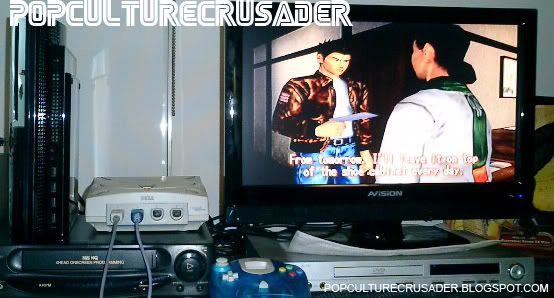
A beloved platform from the sixth generation of video game consoles is officially remembered this day, as the North American release of the "Sega Dreamcast" officially happened twenty years ago. This unique gaming system was fondly remembered for being the first 128-bit console out in the market before the release of the Playstation 2, Gamecube, and Xbox, and had stellar titles in its library such as Sonic Adventure, Crazy Taxi, Skies of Arcadia, Marvel Vs Capcom 2, Resident Evil: Code Veronica, and of course the first two Shenmue games by legendary developer Yu Suzuki.
The legacy of the Dreamcast still remains among gamers who were very dedicated to its selection of games and the ambitions the system had which helped pave the way for many conventions enjoyed in today's gaming world. Despite having a huge controller - it was sufficient and also featured a VMU or Visual Memory Unit that could act as a separate device you could play minigames with besides storing memory and acting as a visual aid to a specific game. At the time of its US launch which was months before the PS2, it enjoyed a good run and success in the market - before ultimately losing to its competition and eventually being discontinued in March of 2001.
The Sega Dreamcast 20 years later 9-9-99 | MVG
Here's a pretty awesome retrospective on the Dreamcast by Modern Vintage Gamer - just in time for the anniversary celebration.
Looks like Shenmue fans who are anxiously waiting for Yu Suzuki's long awaited follow-up "Shenmue III" will finally have something to tide them over for the meantime, as Sega and Suzuki have announced that "Shenmue I & II HD" is finally coming to Playstation 4, Xbox One, and PC this August!
Courtesy of Gamespot Trailers, here's a look at the upcoming collection of the classic Sega Dreamcast and Xbox games, which will give newcomers a chance to experience the first two titles that chronicle Ryu Hazuki's adventure to avenge his father's death at the hands of Lan Di!
Shenmue 1 And 2 Pre-Order Trailer
Shenmue I & II will hit PS4, Xbox One, and PC on August 21!
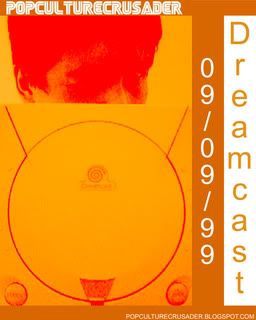
Last year, I took this photo in celebration of the 10th anniversary of Sega's last console of one of my favorite video game systems of all time - The Sega Dreamcast. It was the first 128-bit system to appear in the sixth generation console era, and despite having a lively selection of games in its library, most prominently in the fighting game category, it only enjoyed a couple of years of success, right until the moment Sony released its successor to the original Playstation, the PS2. Yes, most of us gamers really miss the Dreamcast days, but now that's all about to change... 'cause it's coming back! Well, in a way that is...
Via a report on Kotaku, the Dreamcast library will be making a return via Digital Download, in celebration of the defunct console's 11th anniversary! To be available this fall, the first two games coming out will be Sonic Adventure and Crazy Taxi, two titles I've enjoyed back in the past and look forward to playing again! I can already imagine the possibilities and other classics coming out eventually, but what I'm most looking forward to is THIS GAME's return, as well as its sequel!
The Dreamcast is coming back... Time to play lucky hit!
It's September 9, 2009... a memorable date that's a cause for celebration for many. Its unique numbering sequence and configuration have been the subject of many special coverages, one of them coming from Yahoo itself, but the date also holds a lot of significance for gamers, especially those who keep track of monumental releases in gaming history. For owners of the original Sony Playstation, this day marks the official release of Square's (presently Square Enix) Final Fantasy VIII, a game that celebrates a decade of existence today. My friend Billy shares his memories of the game in his official blog. I, however, will be talking about something a little more personal. It's a piece of hardware that has stood the test of time, and remains as a symbol that dreams can come true... especially in videogames.
Exactly ten years ago to this very day, Sega unleashed their sixth generation console, the Dreamcast, to the American gaming public. The graphics and 128 bits of power it boasted were just the tip of the iceberg, as the shiny white piece of hardware had success and potential written all over it. During its time in the console market, the Dreamcast has birthed several memorable titles, many of which remain cult classics to this very day. Many arcade games back in that era also saw nearly flawless translations to the machine, effectively giving the console dominant status over the console market a few years prior to the launch of Sony’s Playstation 2 or Microsoft’s Xbox. Indeed, the Dreamcast has made its mark in history, and it would truly be an understatement to call it a failure, for it has done quite the opposite during its short-but-sweet lifetime. With its huge controllers, Visual Memory Units, and several other unique features, what’s not to love about this console? Rather than dictating its entire history (which can be looked up in the web), I’m going to take this time to reflect on my experience with Sega’s final videogame console, and the joys it bestowed upon me and everyone else in my life all those years ago.
Dreamcast Boot Up Screen. It felt somewhat magical back then...
Truth be told, I wasn’t really planning to buy a Dreamcast at first. I was clinging on to my beliefs that I would remain with the Playstation brand for all time to come. For as long as games continued to be released for the PS1 and a successor came to take its place, I wouldn’t be shifting brands anytime soon. However, the urge to play new and upcoming titles became stronger than I thought. Things took a turn for the worse when almost every Capcom fighting game I loved subsequently saw release for the Dreamcast, and when the publisher announced it was going to bring its next entry to the Resident Evil/ Bio Hazard series to that console, I finally relented and decided to buy the machine to satiate my videogame cravings. Around the summer of 2000, I became the happy owner of the first 128-bit console to ever be released, and it was the start of a prosperous relationship I would have with Sega’s ultimate platform that would last for several years to come.
The first and finest iteration of Marvel vs Capcom 2 for the sixth generation of gaming consoles... 'Nuff said.XD
The first games I bought alongside the Dreamcast were both Capcom games, yet each was from a different genre and held on its own ground to consider them must buy titles back then. The two, namely Marvel vs Capcom 2 and Resident Evil Code: Veronica, were much anticipated titles, and as I stated earlier, these two games were the sole reason why I gave into my “Dreamcast desire”. Suffice to say, both proved to be worth the price of admission, as I embarked on several weeks of epic game time one after the other. MvC2 was a monster upon its initial release in arcades, but when the DC port arrived in stores, it became a legendary beast of a game nobody could take their hands off of. To this very day, many consider the Dreamcast version of Marvel vs Capcom 2 THE definite version to own, and this claim was only contested recently with the rerelease of the game for Xbox Live and Playstation Network… with all characters unlocked and everything represented in full High Definition glory. Still, anyone with a nostalgic eye for things would know that the MvC2 engine was built around the NAOMI hardware, which uses the same hardware components as the Dreamcast.
Japanese Commercial of Resident Evil/ Bio Hazard Code: Veronica. Sweet.XD
The other game that virtually ate up my time with the console was RE Code: Veronica. As a direct sequel to Resident Evil 2, it features Claire Redfield returning as the main character, together with her brother, Chris Redfield – the main protagonist from the first game. Bundled in a two disc GD-ROM package (Giga Disk-Read Only Memory – the disc medium the Dreamcast utilizes), Code Veronica was the first non- Playstation Resident Evil game, and was the first entry in the series to see several changes in gameplay and various graphical improvements. Despite retaining it’s B-movie inspired plot elements, the game was very successful, and I enjoyed every moment playing the game and living the adventure. I must admit, I wasn’t truly impressed with the inclusion of the whiny secondary character Steve Burnside, but I was more than thrilled to see Chris back in action, as well as the return of the diabolical Albert Wesker, who didn’t turn out to be dead after the events of RE1 after all. Anyway, that being said, Code Veronica proved successful enough to get a new “Director’s Cut” release in the form of Code: Veronica X, which was Japan exclusive for Dreamcast owners, but was eventually ported to the Nintendo Gamecube and Playstation 2 when they were released a couple of years later.
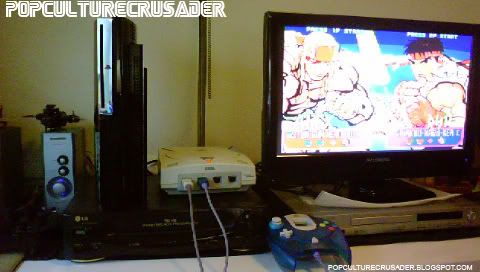
My fighting game setup. This was the reason why I adored the Dreamcast so much... It was literary "The Fighting Game Console" to have back then.XD
Down the line, the Dreamcast proved to be a great investment on my part as a fighting game fanatic. I affectionately call it the “Fighting Game Console” because to me, at least, that’s what it’s best known for. Aside from releasing the first two Marvel vs Capcom games, several near perfect translations of classic arcade fighters saw the light of day with the machine, such as Soul Calibur, the Power Stone series, Street Fighter III series, Dead Or Alive 2, Tech Romancer, Project Justice, Guilty Gear XX, The King Of Fighters series, and even Garou: Mark Of The Wolves. Later on, two rival gaming companies would collide and release the Capcom vs SNK series of fighting games, which would prove, yet again, why the Dreamcast is a fighting game maniac’s dream machine come true. Despite its bulky, 2-trigger, 4-button, single analog stick and D-pad controller, nobody complained about the results and enjoyed kicking ass anyway. If anyone had a problem, they could always buy a modified controller or arcade stick to even the odds fairly.
Trailer to Sonic Adventure 2. Fun times with the Blue speedster mascot of Sega back then...
As far as the other games go, adventure games were fairly short in numbers during the Dreamcast’s lifetime. Sonic still led the charge with his Sonic Adventure games, and several other titles like Headhunter tried to keep me preoccupied for a while. In the end, however, none of these games would satiate my appetite for a good long journey…until legendary game developer Yu Suzuki came into the picture and introduced his masterpiece. Working on an action game project dating back to the days of the Sega Saturn, Suzuki’s work was one of epic proportions, and when it finally saw release in the Dreamcast, it changed the adventure game experience forever. That game was none other than Shenmue.
The Dreamcast Magazine Shenmue Trailer... Nostalgia's kicking in again!
Above anything else back then, Shenmue was THE definite reason why a person should own or experience playing a Dreamcast. It was an ambitious and larger-than-life game that borrowed many elements from different genres, seeking to immerse players in an almost real life gaming experience. Set in 1986 Japan, the game chronicles the story of Ryo Hazuki, a teenaged martial artist who returns home to witnesses the brutal death of his father Iwao at the hands of a mysterious Chinese man named Lan Di. Seeking revenge for his father’s murder, Players take control of Ryo as he embarks on a quest that takes him around the streets of his neighborhood Dobuita and all the way to the harbor located in Yokosuka.
Shenmue was most certainly "The Dreamcast Experience" incarnate... and it's amazing I'm playing it again after so many years!
Shenmue, for its time, was a complete experience althogether. Combining several gameplay methods, the player could interact and pursue the narrative through exploration and conversation with various individuals throughout the game. Introduced in the game were QTE or Quick Time Event sequences that required button presses at the precise moment they flashed on the screen. This, combined with several battles the player engaged in as Ryo using his martial arts skills, made up the action sequences of the game. The player could also shop, buy items, or even play in the local arcade as Ryo, making Shenmue a true and worthwhile feat in gaming history.
Trailer for Shenmue II, which never saw a US Dreamcast release, but it did manage a European release with English Subtitles over the Japanese dub. Even better.
As the years went by, Sega started to feel the pressure and faced stiff competition, as the Sony Playstation 2 finally made its long awaited debut in fall 2000. This marked the beginning of the end for the Dreamcast, as it saw less support from third party developers who opted to move operations to the newer consoles. Production went down, and games that were once “exclusive” to the console were no longer such a thing, with titles like Shenmue II seeing a release for Microsoft’s Xbox instead. Fortunately for some, that game still saw release for English audiences, albeit in Europe only with English Subtitles placed over the Japanese Audio. Indeed, the inevitable was going to happen, and while many saw this as the perfect time to jump ship and grab a PS2, I still held on to my Dreamcast, clinging to it like a kid would with his stuffed teddy bear by his side. I just couldn’t let this thing go, even in the face of change and defeat.
In the end, Sega decided to cease and desist production of the Dreamcast on January 31, 2001. About 60 titles still saw a North American release until early 2002, but after that, there was no more official support given to the console. Sega made no attempts in creating a new successor either, as they eventually became a third party developer themselves, releasing their games for the PS2, Xbox, and Nintendo Gamecube. Yes, what was once unthinkable finally happened eventually; Mario and Sonic together on the same platform and the same game.
US Commercial of the Sega Dreamcast. Back then, it was full of characters and potential, alright...
While the Dreamcast may be long gone and buried now, it certainly hasn’t been forgotten… not by a long shot. It was way ahead of its time, and it demonstrated several feats that garnered attention and praise, especially to those who were there to witness its potential. Despite its short yet sweet lifespan, it has crafted a legacy that has endured for as long as anyone can remember, giving players and developers a taste of what the future might bring. Being the first console to incorporate Internet play via a modem attachment, it also laid the grounds for the online battles and skirmishes we enjoy in several games today. It’s true that many like myself will miss the glory days of Sega’s white and grey system, but it has carved itself a permanent place in gaming history no one should ever forget.
Happy 10th Birthday, Sega Dreamcast. Let your story continue to inspire others to dream.^^